close
menu
close
menu
close
menu
close
menu
Outsourcing has become part of the NHS pathology landscape and the demand continues to rise. The shortage of both pathologists and technical staff has become endemic in some hospitals, challenging even the most efficient services.
Unfortunately, I believe outsourcing is still sometimes regarded as a mark of failure: a last resort when internal delivery falters. Maybe this view overlooks the reality that pride and professionalism are not enough to counteract a global workforce crisis. The inability to meet workloads is not a reflection of poor performance, but of structural pressures that have intensified across health systems worldwide. My perspective? The increasing complexity and volume of diagnostic work demand new models of collaboration that strengthen, rather than replace, internal teams.
Early outsourcing arrangements often filled short-term gaps, managing peaks in workload or generating extra income. The landscape has since evolved. For many Trusts, external partnerships now play a central role in maintaining continuity, ensuring safe turnaround times, and supporting sub-specialist expertise that would otherwise be unavailable.
The shortage of histopathologists and biomedical scientists remains acute, and sustainable solutions are needed. Rather than viewing outsourcing as a last resort, it should be understood as an opportunity to build resilient, embedded partnerships that expand a Trust’s capability.
This is where companies such as Diagnexia play an important role. Rather than offering remote reporting as a transactional service, Diagnexia’s model is built around embedded collaboration. By connecting NHS Trusts with sub-specialist pathologists, including UK-trained experts working internationally, and using an AI-driven, real-time case assignment tool, Diagnexia ensures that each specimen is reviewed by the most appropriate specialist.
This approach transforms outsourcing into genuine integration. Dedicated point pathologists can be aligned with specific Trusts to provide continuity, accountability, and inclusion within the local diagnostic team. In this model, the external pathologist is no longer a faceless name but an accessible, contributing colleague - attending MDTs, supporting trainees, and engaging in service development remotely.
The idea of a “permanent virtual pathologist”, composed of several sub-specialist experts, represents a paradigm shift in diagnostic service design. This approach offers continuous coverage, removes the constraints of physical staffing, and delivers a breadth of expertise that few individual departments can sustain.
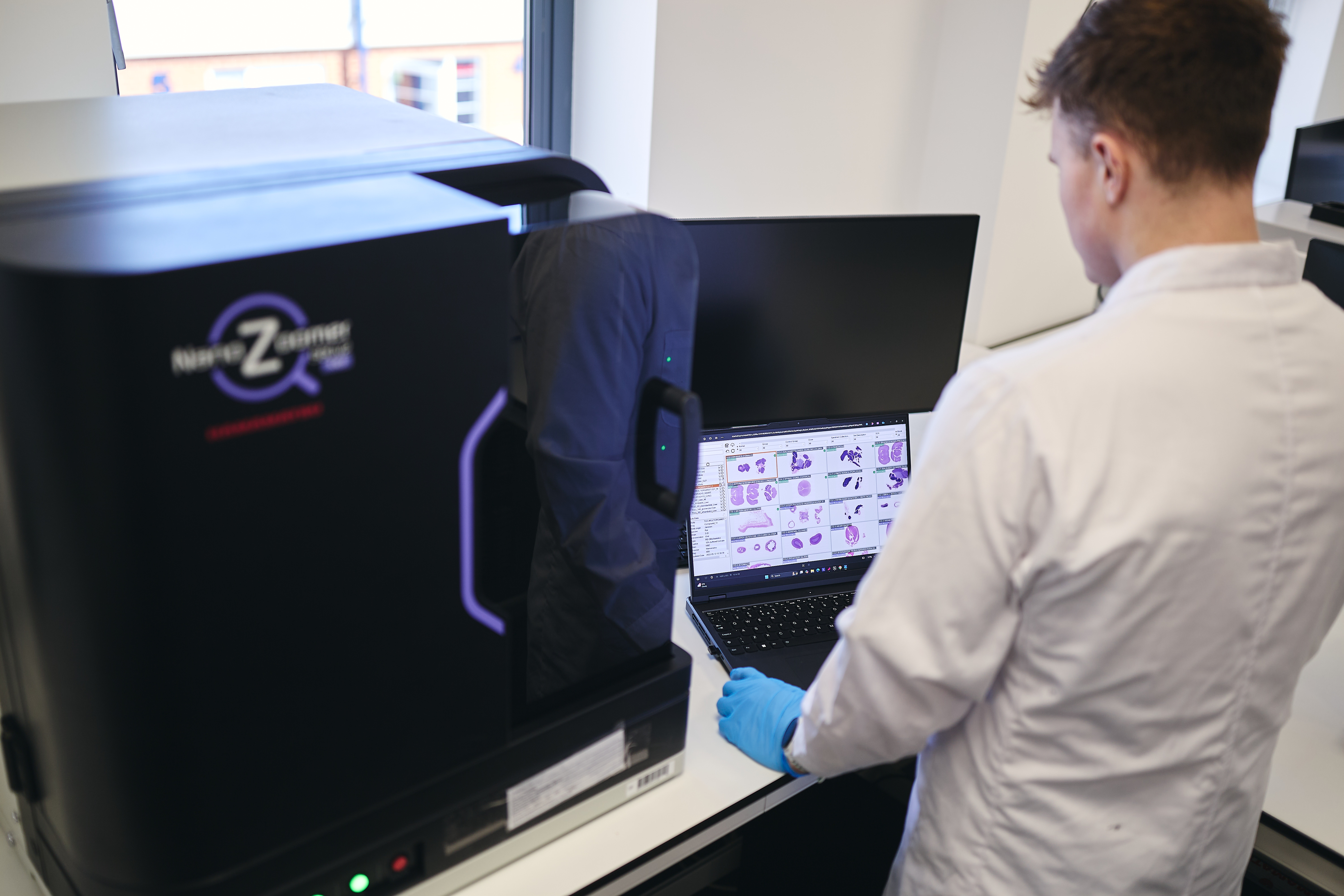
Our model at Diagnexia exemplifies this concept. By combining multiple sub-specialist pathologists within a single, AI-enabled virtual framework, Diagnexia provides seamless, around-the-clock reporting while maintaining the accountability and quality expected of an in-house service. Supported by our UKAS-accredited wet lab for specimen cut-up, staining, and slide scanning, this end-to-end workflow demonstrates how virtual integration can deliver consistency, flexibility, and diagnostic excellence across NHS Trusts.
Thinking beyond outsourcing means redefining how we design clinical support systems. The goal is not to replace internal teams, but to embed complementary expertise and technology that strengthen local capacity. When implemented strategically, these partnerships enhance diagnostic efficiency, continuity, and ultimately, patient care.
Outsourcing is not the end of the story. It’s the start of a smarter, more sustainable way to deliver diagnostics. The next chapter belongs to embedded, AI-enabled collaboration where expertise is shared seamlessly across teams and borders. At Diagnexia, we are proud to be at the forefront of this transformation, partnering with NHS Trusts to redefine how diagnostic excellence is delivered, sustained, and scaled for the future.
Outsourcing has become part of the NHS pathology landscape and the demand continues to rise. The shortage of both pathologists and technical staff has become endemic in some hospitals, challenging even the most efficient services.
Unfortunately, I believe outsourcing is still sometimes regarded as a mark of failure: a last resort when internal delivery falters. Maybe this view overlooks the reality that pride and professionalism are not enough to counteract a global workforce crisis. The inability to meet workloads is not a reflection of poor performance, but of structural pressures that have intensified across health systems worldwide. My perspective? The increasing complexity and volume of diagnostic work demand new models of collaboration that strengthen, rather than replace, internal teams.
Early outsourcing arrangements often filled short-term gaps, managing peaks in workload or generating extra income. The landscape has since evolved. For many Trusts, external partnerships now play a central role in maintaining continuity, ensuring safe turnaround times, and supporting sub-specialist expertise that would otherwise be unavailable.
The shortage of histopathologists and biomedical scientists remains acute, and sustainable solutions are needed. Rather than viewing outsourcing as a last resort, it should be understood as an opportunity to build resilient, embedded partnerships that expand a Trust’s capability.
This is where companies such as Diagnexia play an important role. Rather than offering remote reporting as a transactional service, Diagnexia’s model is built around embedded collaboration. By connecting NHS Trusts with sub-specialist pathologists, including UK-trained experts working internationally, and using an AI-driven, real-time case assignment tool, Diagnexia ensures that each specimen is reviewed by the most appropriate specialist.
This approach transforms outsourcing into genuine integration. Dedicated point pathologists can be aligned with specific Trusts to provide continuity, accountability, and inclusion within the local diagnostic team. In this model, the external pathologist is no longer a faceless name but an accessible, contributing colleague - attending MDTs, supporting trainees, and engaging in service development remotely.
The idea of a “permanent virtual pathologist”, composed of several sub-specialist experts, represents a paradigm shift in diagnostic service design. This approach offers continuous coverage, removes the constraints of physical staffing, and delivers a breadth of expertise that few individual departments can sustain.
Our model at Diagnexia exemplifies this concept. By combining multiple sub-specialist pathologists within a single, AI-enabled virtual framework, Diagnexia provides seamless, around-the-clock reporting while maintaining the accountability and quality expected of an in-house service. Supported by our UKAS-accredited wet lab for specimen cut-up, staining, and slide scanning, this end-to-end workflow demonstrates how virtual integration can deliver consistency, flexibility, and diagnostic excellence across NHS Trusts.
Thinking beyond outsourcing means redefining how we design clinical support systems. The goal is not to replace internal teams, but to embed complementary expertise and technology that strengthen local capacity. When implemented strategically, these partnerships enhance diagnostic efficiency, continuity, and ultimately, patient care.
Outsourcing is not the end of the story. It’s the start of a smarter, more sustainable way to deliver diagnostics. The next chapter belongs to embedded, AI-enabled collaboration where expertise is shared seamlessly across teams and borders. At Diagnexia, we are proud to be at the forefront of this transformation, partnering with NHS Trusts to redefine how diagnostic excellence is delivered, sustained, and scaled for the future.